The hype behind sodium-ion batteries, explained in ten minutes
Sodium-ion batteries are rising in prominence for a number of technical, practical and political reasons, writes Liam Critchley
Metal-ion batteries are one of the most important classes of battery architecture today. Lithium-ion (Li-ion) has dominated the market for many years due to having a good trade-off between scalability of manufacturing, safety and energy density. However, other options have been slowly creeping up behind Li-ion batteries for many years, and while not at the commercial readiness of Li-ion yet, there could be some disruption in the coming years as other metal-ion technology matures. Of all the metal-ion options beyond lithium, sodium-ion (Na-ion) batteries have the most commercial potential due to their safety, similar cost per kWh to Li-ion, and the ease and low cost of obtaining an abundance of raw materials.
What are Sodium-ion Batteries?
In terms of battery architecture and setup, Na-ion batteries are not much different to Li-ion batteries. The anode releases electrons during operation, while the cathode receives them. In between the two electrodes are an electrolyte and separator and the ions shuttle between the two electrodes (via the electrolyte and through the separator) to charge and discharge energy. During charging, the ions move to the cathode to create a potential difference, and the electrons are transferred to the external circuit. During charging, the ions move to anode and receive electrons from the external circuit until an end-of-charge voltage threshold is reached.
The main difference is the ions that are released and shuttled between the two electrodes are sodium ions, not lithium, and therefore the cathode is a sodium-based material instead of a lithium material. Another slight difference is the anode material. While both use carbon-based materials, Li-ion anodes use well-established graphite materials that have been manufactured for decades. However, graphite is not suitable for Na-ion batteries, so other forms of carbon – such as hard carbon– are used as the anode material. There are also many other anode materials being trialled in academia, including manganese oxide, graphene aerogels, carbon nanofibres, and red phosphorus. Like Li-ion batteries, the electrolyte varies based on the specific type of Na-ion battery.
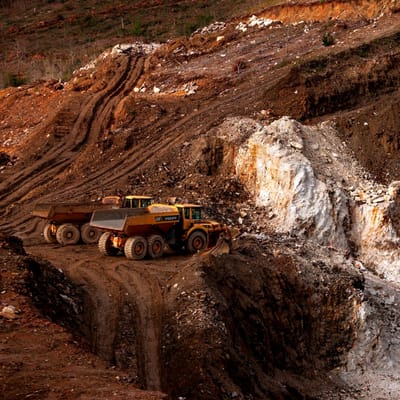
Despite their similarities, there are some differences between the two technologies that relate to the wider battery ecosystem that make Na-ion batteries desirable. For example, lithium mining is mostly very destructive, and it is becoming more energy intensive and costly to extract the lithium out of the ground. Since 2021, lithium prices have increased 700% and may likely reach a point where it starts to become economically unfeasible for some electronics (without increasing the price significantly of consumer devices).
The demand for batteries is growing year on year and is likely to continue along this trend for many years to come. As technology advances further, the price and scarcity of lithium (and other rare metals such as cobalt) are likely to increase further. On the other hand, Na-ion batteries offer an alternative solution because sodium is much more widely available without extensive mining operations. So, not only is it potentially a more sustainable solution with a lower environmental impact—as sodium is the world’s 6th most abundant element—it is much lower in cost and more readily available then lithium. So, it could mitigate the potential economic and scalability issues of lithium going forward.
Aside from the sustainability aspects, Na-ion batteries are inherently safer than Li-ion batteries as they are less likely to catch fire or explode. Perhaps one of the key technical benefits of Na-ion over Li-ion though is their wider operating temperature range. Where Li-ion batteries are typically only optimal between 0-50°C, Na-ion batteries can operate efficiently from -40°C to 70°C – making them better than Li-ion for harsh operating environments.
Even though both battery architectures have similar battery chemistry, it is differences at the atomic level that has made Li-ion batteries more commercially feasible than Na-ion. The difference? Three 10-billionths of a metre, or 0.3nm. The atomic radius of sodium is 0.3 Angstroms larger than lithium. While this is a tiny amount and may not seem like a big difference, at the atomic level it is a rather substantial increase that has a big impact. Practically speaking, it means that sodium’s atomic weight and mass is over 3 times larger than lithium – 22.99 atomic mass units (amu) to lithium’s 6.94 amu.
The movement of such heavier and larger ions between the electrodes creates more mechanical stress on the cell that causes it to deteriorate quickly. Because of this, Na-ion batteries have typically had much shorter cycle lives than Li-ion batteries. The issue is compounded by graphite not being suitable for Na-ion batteries because sodium intercalation into the anode is thermodynamically unfavourable due to their size. This makes it difficult for the ions to enter in and out of the anode, causing adverse and irreversible exfoliation reactions at the electrolyte-anode interface – causing it to break down after only a few cycles.
Given that the graphite supply chain is highly robust, and battery-grade graphite is produced in such large quantities for Li-ion batteries, it has been a big commercial challenge to find a scalable alternative. If graphite were suitable for Na-ion batteries, we may have seen a much quicker adoption because there’d be a much better material supply chain than there is currently for Na-ion batteries – and it could have essentially ‘piggybacked’ off the Li-ion supply chain instead of having to create an entirely new one.
But there have also been more technical challenges as well. The reduction potential of sodium is lower than lithium, so Na-ion batteries supply a lower voltage than Li-ion—typically 2.3-2.5 V vs 3.2-3.7 V for Li-ion. Even though both ions carry the same charge, because of the increased weight of sodium a Na-ion battery can carry up to 40 percent less charge than Li-ion battery (assuming the same weight). Na-ion batteries also struggled to break beyond a cycle life of around 5000 cycles compared to 8,000-10,000 cycles for Li-ion, and an energy density of 140-160 Whkg-1 compared to 180-250 Whkg-1 for Li-ion. But the landscape is now changing, and Na-ion is getting closer to Li-ion in terms of capabilities.
In a world where people are looking for as much charge as possible in portable electronics, Na-ion batteries have struggled to break into these highly sought-after commercial markets. Despite these setbacks, there are many applications where the wide operating temperature range safety, and sustainability benefits of Na-ion batteries outweigh the negatives, which is why they are now starting to be commercialised. As with any new technology, technical barriers need time to be overcome, and this is the same for Na-ion batteries – they have just taken longer because lithium was favourable for a lot of consumer applications that have been driving the battery market.
The maturity of the Li-ion industry has created many different battery Li-ion architectures, including lithium iron phosphate (LFP), lithium nickel manganese cobalt (NMC), lithium nickel cobalt aluminium oxide (NCA), lithium-ion manganese oxide (LMO), lithium-ion cobalt oxide, and lithium titanate oxide (LTO). While the Na-ion industry is not as mature, there are still different classes of Na-ion battery being developed based on their internal architecture.
Thermal Na-ion Batteries with Solid Electrolytes
Batteries such as sodium-sulphur (Na-S) and sodium-nickel chloride (ZEBRA) use a solid aluminate electrolyte. These batteries can only be used under high operating temperatures (250-370 °C) because the sodium anode becomes a liquid during operation. These batteries have a typical energy density between 100-120 Whkg-1 and operating temperature range of -20°C to 60°C, and they can be safely discharged down to 0V.
The wide operational range and high internal temperature operating requirements means that they are more suited for stationary storage applications in extreme temperature environments – such as power grids, heavy industry applications, and as backup power for subways and other underground railway systems that have more extreme local temperatures.
Aqueous Electrolyte Sodium-ion Batteries
Na-ion batteries can also contain aqueous electrolytes and are known as saltwater batteries. These are very safe because they mostly contain water, with both liquids and hydrogels being used as the electrolyte. The absence of any toxic or flammable materials makes them an attractive option from an environmental and recycling perspective too. However, aqueous electrolyte batteries currently have a lot lower energy density compared to other Na-ion batteries – between 10-25 Whkg-1 – because the batteries need to operate at a low voltage to prevent oxygen and hydrogen evolution reactions in the cell.
More work is being done to try and make these batteries more commercially feasible, and potential applications could include small-scale (home-scale) stationary storage applications and environmentally friendly batteries for disposable health monitoring devices and implantable medical devices.
Organic Electrolyte Sodium-ion Batteries
Like Li-ion batteries, a lot of work has gone into Na-ion batteries with organic electrolytes, with energy densities reaching beyond 150 Whkg-1 (the lower end of Li-ion batteries). Academic laboratory results have also seen much higher energy densities too. Despite having lower energy densities and not being able to hold as much charge as Li-ion, the Na-ion batteries have high power densities, meaning that they charge quicker than Li-ion. These batteries have also shown very wide operating temperature capabilities, ranging from -40°C to 70°C. While Na-ion batteries are safer than Li-ion, organic electrolytes always carry a higher risk than aqueous electrolytes, but some of the big applications include stationary storage, and more recently, electric vehicles (EVs).
The Na-ion industry is nowhere near the scale of Li-ion but there are global developments occurring that are pushing the industry in the right direction. Overall, Na-ion batteries are still more expensive than Li-ion batteries, but this is all due to economies of scale and the presence of a robust lithium supply chain. Na-ion batteries do have the potential to be cheaper in the long-run but will require GWh production capacities and a widespread adoption from end-users. One of the advantages that sodium does have over other battery architectures under development, is that the processes are very similar to lithium, so existing plants could be retrofitted to accommodate Na-ion production and scale up at much lower costs using similar economy of scale methodologies to lithium.
As is stands, the main market (like Li-ion) is China. This is where most of the Na-ion production is happening. CATL, the biggest producer of Na-ion batteries in the world, has recently released multiple lines aimed at stationary storage and EVs and have even developed hybrid battery packs that use both Na-ion and Li-ion technology.
CATL have now developed Na-ion batteries with 12C charging rates and temperature operating ranges of -40-70 °C—with 90% retention of usable power at -40 °C. The batteries developed by CATL are comparable to Li-ion with energy densities up to 175 WhKg-1, 500 km ranges, and lifetimes up to 10,000 cycles. They have also developed 24 V start-stop batteries specifically for heavy duty trucks with expected service lives of 8 years—and the ability to start even after being idle for a year. It's been touted that the next generation of CATL Na-ion batteries will go above 200 Whkg-1, but this won’t be until at least 2027.
Behind CATL are HiNA and BYD, two other big Chinese companies helping to spearhead Na-ion commercialisation. HiNa have developed batteries with an energy density of 165 Whkg-1 that can be charged in 20-25 minutes, used over -40-45°C temperature ranges, and have a cycle life of at least 8000 cycles.
BYD—best known for their EVs—have developed utility scale Na-ion batteries that have a storage capacity of 2.3 MWh (compared to 5 MWh for their Li-ion counterparts) but are looking to exploit the low temperature tolerance and safety of Na-ion batteries. However, BYD are making more waves on the supply chain side, as they have started the construction of a 30GWh (annual capacity) sodium-ion battery plant in China which will be able to scale up the production capabilities of Na-ion batteries far beyond what we see today and will set the wider supply chain on the right path.
Europe and the rest of the world falls quite far behind China in terms of production volume, battery performance, and the potential for developing a robust supply chain. There have been promising companies in Europe, such as Faradion in the UK and Northvolt in Sweden that have already closed. Faradion were bought out by the Indian company Reliance New Energy, while Northvolt filed for bankruptcy in 2025 after delivering 160 Whkg-1 sample cells to customers in 2024.
Two companies—Stora Enso (Finland and Sweden) and Altris (Sweden)—have joined forces in Europe to build more sustainable batteries and try to build a local supply chain for hard carbon anode materials made from lignin. They have so far developed some prototype 3V 20 Ah cells, but it is still in early stages compared to what is going on in China. The company has stated that they hope the abundance of lignin in trees could help to develop a consistent raw material supply chain that is not reliant on material from outside Europe, with both companies stating that they hope to help better establish a European battery value chain for Na-ion batteries. But this could take a while, and will require more organisations to get involved.
As it stands, Na-ion batteries lack a robust supply chain compared to lithium, and it is currently almost non-existent in Europe and any locations outside of China. Like the Li-ion battery market—which China also controls with about 79% of all Li-ion batteries and 61-70% of global lithium refining capacity—the Na-ion market is likely to also revolve around the expansion of the Chinese market.
It could be that global companies—such as BYD—who are creating the gigafactory to build a supply chain, but also have operations in Europe, may end up making the first major moves into Europe and help to build a more robust supply chain. A lot of this is hypothetical at this stage, but given that Europe has already had some promising Na-ion manufacturers close down their operations already—in-part due to supply chain issues—it’s not far-fetched to suggest that the supply chain in Europe may hinge on global Chinese companies (who are already well established and have the capital) to first establish a robust supply and demand, where more European companies can then follow and build from any potential success.
Only time will tell, but Na-ion batteries are undergoing a lot of development and commercial advancement and may become a more mature and commercially feasible alternative to Li-ion in the next 5-10 years for multiple applications.
Become a subscriber and receive the digital edition of European Energy Innovation every quarter.