Lithium wars and the unwinnable fight for raw materials
Europe's appetite for key resources fuels tension abroad and difficult environmental decisions locally, writes Sam Meadows

A decade ago, Chinese officials designed a plan to dominate the world in several key sectors within a decade. Three years later they began to distance themselves from “Made in China 2025” in order to curry favour with their European and American counterparts. But the plan continued in the background, unabated.
That dominance is particularly evident in the supply chain for lithium batteries. Today, as a result of protectionist policies, strategic global expansions and a healthy dose of state funding, China dominates the market for electric vehicles and the cells which power them.
One of the most important components of an EV battery is lithium. The metal is so lightweight that it is ideal for power cells that need to be highly mobile, hence its dominance in transport and tech. Research into batteries using sodium is ongoing, but at present the weight advantage of lithium batteries makes them the preferred choice for vehicle manufacturers.
While Australia and Chile beat China into third place when it comes to lithium extraction, the vast majority of the unprocessed result is sent to China and does not emerge until it is in battery form – or even better, if you are the Chinese government, within an electric vehicle. For Europe this creates a problem. Car manufacturing accounts for some six per cent of GDP across the 27 member states, and the continent is responsible for 25 per cent of EV sales.
At the start of the new millennium, China had barely any lithium mining or processing capacity.
As European countries continue to pursue their goal of phasing out combustion engines by 2035, lithium batteries – and the components that make them – are only going to become more important. If Europe fails to catch up – or at least take a chunk of that market share – then its signifi cant automobile industry “risks becoming a thing of the past”, researchers at Lund University in Sweden warned, as a result of dependence on Chinese industry.
The risks of this dependence came into stark focus in October, when Xi Jinping’s government announced that foreign companies would need permission to export materials like lithium, giving China ultimate control over how they are used. Lithium is fast becoming one of the world’s most important minerals. Demand is expected to boom after 2030 as electric vehicles become central to our lives. But “artificially” low prices are hampering European efforts to catch up.
The question now is: is it too late to do something about it? At the start of the new millennium, China had barely any lithium mining or processing capacity. This was not unusual at the time. Only Chile, where extraction began in the 1980s, had much of an industrialised lithium footprint, with a few plants spotted elsewhere. Today, China dominates. The Chinese government recognised the importance of a healthy lithium supply chain early on and, through a series of strategic overseas investments and state support, has catapulted its industry to success. Chinese companies hold stakes in Greenbushes, the largest lithium mine in the world in Australia, and in the Chilean lithium giant SQM, wresting a minority stake away from the son-in-law of former Chilean dictator Augusto Pinochet.
The Made in China 2025 plan designated electric vehicles as a key industry, and Chinese companies mine for the mineral at a loss in order to give its battery manufacturers a secure supply. This has left Europe behind. Despite its hugely important car industry, Europe currently has very little in the way of refining or battery-making capacity. The Lund study warns that Europe currently has a larger supply defi cit than the US and China. This has created energy dependency.
A 2025 German study warned that Europe suffers from an “indirect form of energy dependency” and that capacity will need to increase. There’s a risk of becoming “vulnerable to other people’s whims” and losing strategic autonomy, said Luc Braun, an analyst at Benchmark Mineral Intelligence. “We’ve seen how big of a problem fossil fuel dependency is with Russia,” he added. “It restricts your options.”
This risk was crystalised in October when China’s government announced that foreign companies would need its approval to export products containing rare earths, including lithium. It has said that products intended solely for civilian use will be unaffected, but analysts are concerned that this represents a significant risk for European carmakers.
André Månberger, the researcher behind the Lund study, said in a press release: “The risk of China’s dominance is not only that Europe will lose its domestic automotive industry and thus its prosperity, but also that we could become a target for blackmail in the event of global conflicts.”
Irina Patrahau, a critical minerals expert at the Hague Centre for Strategic Studies, said: “They’re showing that they are willing and able to use [their dominant position], as leverage for other goals.” While several lithium deposits have been identified in Europe, most notably at a site in central Germany, commercial extraction has yet to begin.
“We’re still waiting for one project that shows that it is possible and give some confidence in the European environment,” Patrahau said. However, according to the Lund study – published before the German discovery – if existing lithium deposits were to be exploited, the EU could halve its future import dependence.
“These projects could make up a big part of the total demand,” Månberger said.
Central to the EU catch up play is the Critical Raw Materials Act, passed in 2024. According to the legislation, by 2030 the EU must mine 10 per cent of its annual needs, process 40 per cent and recycle 25 per cent. It also manages overseas reliance, stating that no more than 65 per cent of annual needs must come from a single country. The Act has designated 47 projects as of strategic importance, 18 of which relate to lithium. Strategic designation means member states are required to ease the projects through the process of permissions and permitting.
However, critics point out that, while the designation of strategic importance means that the EU will link companies with private investors, it does not release any public funds to support development. “[The financing] is something we really feel they need to do more on,” said Emily Ritchey, policy manager at the Brussels-based think tank Transport and Environment.
For Peter Tom Jones, director of the KU Leuven Institute for Sustainable Metals and Minerals, Europe is in need of a “paradigm shift” when it comes to lithium and EV production. “Made in Europe” supply chains are needed, along with public procurement schemes which incentivise buying European-made vehicles, buses and batteries. This would require supporting development across the whole supply chain.
“If one step is missing, then the EU loses its autonomy. A chain is only as strong as its weakest link,” he added.
The most promising discovery so far was made in September in Saxony Anhalt in central Germany. Neptune Energy announced that a deposit containing 43 million tonnes of lithium had been found. This would make it one of the largest deposits in the world, rivalling the entire Lithium Triangle of Argentina, Chile and Bolivia.
Magazine Interesting Engineering claimed it could “transform Europe’s role in the global EV and battery supply chain”, while Neptune chief executive Andreas Scheck said the company could “contribute significantly” to the supply of lithium.
Other analysts were less sure that this discovery would transform the fortunes of the industry. The near- term significance of the discovery had been “exaggerated” according to Jones.
“The average time between locating an economically viable deposit and producing lithium is around 15 years,” he said. “Even if the new discovery is world-class, it’s going to take a long time before it will have any effect.”
The EU needs to be supporting large companies which are ready to extract now, he added. “It [the potential for less carbon intensive mining] is super exciting,” Ritchey said. “We should be exploring this in a responsible way, but that doesn’t mean we won’t need to source lithium elsewhere.”
The German project – like all of those within Europe – will have to overcome several challenges. Securing investment in an environment where lithium prices are low is perhaps the most pressing, but it will also need to find a way to square increased lithium mining and extraction with the green energy ambitions of the continent.
On the price side, lithium hit an all-time high in 2022 as EV demand soared. But an increase in supply has seen the price fall by roughly 80 per cent from its peak. Mines in Argentina are operating below capacity, even as dozens of new projects are being proposed.
Jones said the development of lithium capacity in Europe was being threatened by what he described as “geopolitically manipulated” prices, referring to China’s practice of “flooding the market” with cheap, subsidised lithium.
“Projects would run at a loss if they start up today,” he explained. This underlines the need for public investment in the industry. Chinese lithium producers mine at a loss, subsidised by regional governments who recognise its strategic importance further down the supply chain.
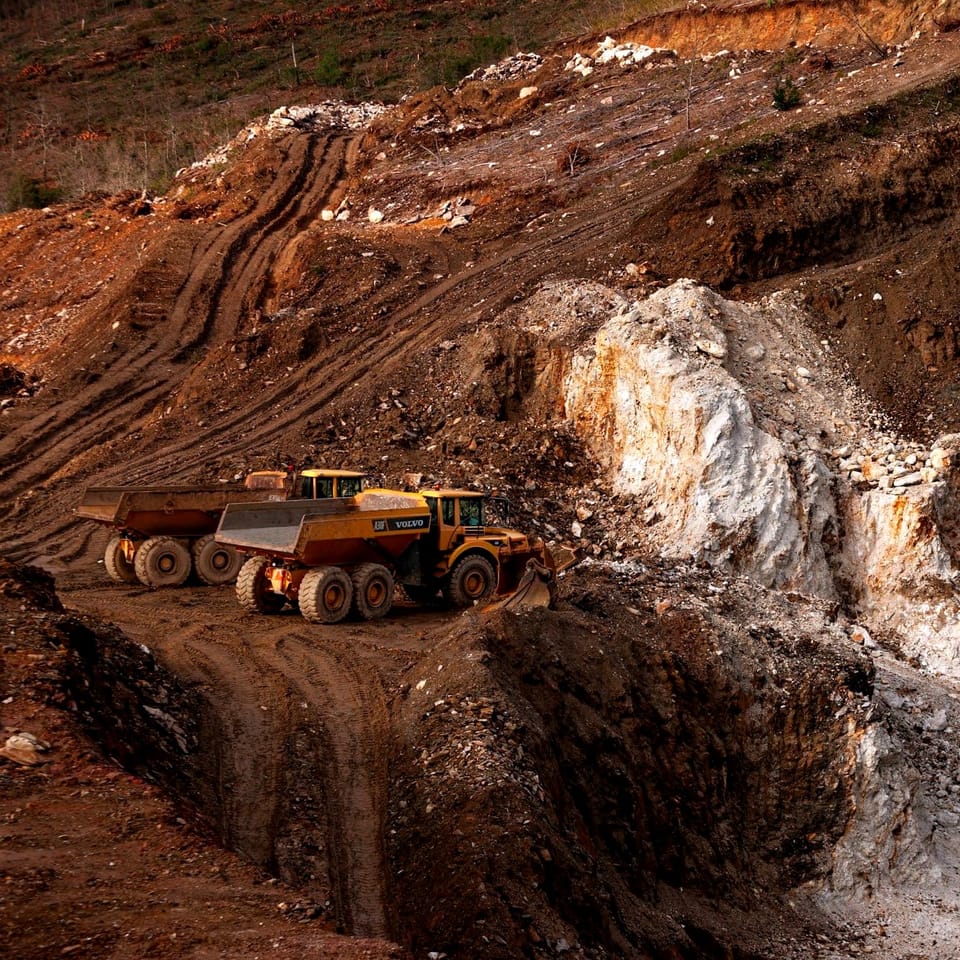
This leads to another issue that China breezes past far more easily than European companies could: the environmental impact of lithium mining. A 2024 article in the Lancet warned that the process for extracting lithium contains “considerable environmental risks”, including pollution, ecosystem destruction and intensive water use.
“The challenge lies in balancing lithium’s role in a sustainable green energy future with the need to protect the environment,” it said. China has proven far more relaxed about environmental regulations than the EU, giving it a competitive edge.
However, this may not be as pronounced an issue as it is sometimes made out to be. The EU represents a huge global market, and Chinese companies will want to continue accessing it; European legislation mandating clean supply chains should have an impact on standards. Ritchey said that Chinese battery and car manufacturers are making efforts to ensure they comply with EU regulations.
Chinese lithium producers mine at a loss, subsidised by regional governments who recognise its strategic importance further down the supply chain.
“The EU can only go so far, but it can place requirements on products coming into the market which make those companies selling batteries in Europe responsible for addressing the supply chain impacts,” Ritchey said. “Chinese manufacturers are coming and asking how they can meet those requirements because they want to sell their cars in the market. So it’s a tool.”
However, some experts have said that while EU policymakers insist on high standards at home, they have been willing to turn a blind eye to supply chain issues elsewhere in pursuit of securing lithium supply. The Lithium Triangle currently supplies 85 per cent of the EU’s lithium imports. A 2024 study by the National Scientific and Technical Research Council of Argentina and other institutes said that: “The current EU responsible sourcing approach overlooks critical local-level justice considerations.”
The researchers argued that in order for the EU to “ensure a just supply chain” it needs to prioritise issues like adequate consultation of indigenous people and equitable participation for communities. In Chile, partly in response to the complaints of indigenous communities, Albemarle and SQM were made to renegotiate their licences to extract and obliged to share a small percentage of profits with local communities.
The EU has signed trade partnerships or memorandums of understanding with several lithium-producing countries, including Chile, Argentina, the Democratic Republic of Congo and Rwanda.
Pia Marchegiani, of the Environment and Natural Resources Foundation, an Argentine NGO, said: “Some of these governments are weak in terms of the rule of law and democratic consensus, and they’re pushing to be a partner of the EU. The EU is willing to turn a blind eye on this.”
The intensive water usage the Lancet alludes to is a factor that has led to local opposition to lithium mining. When the plans for a lithium mine in the Jadar valley in Serbia were announced it sparked large protests. Activists warned of “irreversible environmental damage” if the plan went ahead and also baulked at the overseas involvement of Rio Tinto, which has since paused its plans citing permit delays.
Villagers living near a proposed mine in Portugal have also protested over the potential use of water from a local river. The use of water is a real issue. In Argentina, a community living close to a mine which opened in the 1990s claims that lithium extraction has caused the local river to “dry up”.
A study from the University of Massachusetts found a reduction of 90 per cent in wetland vegetation after mining commenced. A Chilean study has also suggested that the Atacama Salt Flat has been sinking by up to 2cm a year as a result of lithium mining, with an adverse impact on the local population of Andean flamingoes.
Marchegiani said policy in South America has broadly been pro-business, leading to a number of conflicts with local indigenous communities. These issues have led to court action and, in some cases, temporary injunctions on development. The risk of court action from communities and also a lack of water for the projects themselves are risks investors need to keep in mind, she added.
“The lack of strategic planning already caused damage [in northern Argentina] and it could cause a disaster with new operations coming in,” she said. “There’s a risk for investors. Even if you don’t care about the environment, you’re going to have the additional cost of bringing water from somewhere else. If that’s even possible.”
European policymakers can take heart in the fact that, despite high-profile examples of dissent, opposition to lithium mining is low in some parts of the continent. A 2025 study found that public support for a proposed mine in Finland was high, although a crucial factor for acceptance was employment prospects, illustrating the importance of involving local communities in the process.
Supporters of European industry point out that, given the environmental issues present in hard rock mining, there is an opportunity for the continent to pioneer a greener form of lithium extraction. Many of the European projects rely on newer techniques like geothermal extraction techniques or “direct lithium extraction”.
In geothermal lithium extraction naturally-heated underground EEI Analysis brines are removed, with the potential of generating electricity from the heat. Direct lithium extraction refers to a suite of technologies that separate lithium from brine using chemicals or membrane technology.
However, there are still question marks over its effectiveness and its “green” credentials. Using DLE technology means the brine can be reinjected, leading proponents to argue it is better for the environment. However, some studies have shown that its use of freshwater can be significantly higher than traditional evaporation – up to 10 times in some cases. It also requires more energy, which can be generated from renewable sources, but could also lead to an overreliance on fossil fuels. Experts also argue that DLE technology is not yet ready for full, commercial scale up.
Federico Gay, an analyst at Benchmark Minerals, said a DLE plant can cost up to four times more to commission than a traditional one. Low lithium prices compound the cost issue. The challenges in financing the European lithium expansion are illustrated by the story of Northvolt, the Swedish battery manufacturer, which was seen as Europe’s best hope of challenging Chinese dominance, according to the Guardian. It filed for bankruptcy in March after suspending construction of Europe’s first battery gigafactory, blaming “rising capital costs, geopolitical instability, subsequent supply chain disruptions, and shifts in market demand”.
Plans to create a similar battery plant in the US are also at risk of collapse after the Department of Energy rescinded a $197m federal grant for an Israeli company. It would be the first large-scale lithium battery plant in the country.
The logistical and financial challenges of getting this industry off the ground lead some to believe that Europe should focus instead on processing and recycling capacity. “We do see that we will need some levels of mining under the right conditions, but also that we can meet a lot of demand through recycling,” Ritchey said. This could be accelerated by mandating specific levels of recycled mineral content within batteries at an EU level, she said. Estimates vary for how much of European demand could be met by recycling old batteries and removing reusable lithium and other minerals, but a study from Transport and Environment suggested the practice could meet 14 per cent of lithium needs.
The CRMA mandates that the EU should source 25 per cent of its lithium from recycling by 2030. There are also many who argue that pursuing extractive industries like lithium mining in such strong fashion undermines the fight against climate change. The Lancet report states that, while battery recycling offers a partial solution, reducing car ownership and making smaller cars – with smaller batteries – could reduce lithium demand by 92 per cent by 2050. In Norway, which has the highest rates of EV ownership in Europe, smaller cars are incentivised.
“While lithium is vital for the achievement of Europe’s green energy goals, even with high electric vehicle adoption, a 2°C rise in global temperatures remains likely,” the report reads. “Therefore, reducing overall vehicle use, not just gas-powered vehicles, is crucial.”
Investment in public transport, including free-use schemes like those available in Luxembourg, is vital. Leander Wolters, an academic who has researched the impact of EV supply chains on society, said policymakers should be looking at other options, including the promotion of cycling and ridesharing to reduce reliance on cars. The distribution of lithium is also important, she said.
“Are we going to give it all to the big car companies? Maybe, if we are going to mine it, we should reserve a portion for electric buses or community energy grids,” she added. There is a risk, some experts say, that unless the European lithium industry gets off the ground quickly, the ambitious goal to phase out combustion vehicles within a decade will be hard to meet.
“I think there is a really big risk of a backlash and a changing of the policy goals,” said Månberger. “Will that [the 2035 goal] continue to be the goal going forward, or will it be postponed?”
He said European governments, faced with a choice between importing from places like China and manufacturing at home, would have a difficult trade off. “You don’t become popular by outsourcing all of these manufacturing jobs,” he added.
Whichever direction Europe chooses to take, lithium will continue to be a vital element for the foreseeable future. Winning the race with China outright may be impossible, but by using levers like recycling and investment in better green policies, there could be a chance to narrow the gap.
“We’ll never be independent of lithium imports, either at the extraction or processing levels,” said Patrahau. “But there’s something to be said about having some kind of resilience, an alternative in case something happens with the relationship with China or with others that are also building up lithium processing facilities.”
Become a subscriber and receive the digital edition of European Energy Innovation every quarter.